
Finding Our Object
When my professor mentioned that one of our assignments was a scavenger hunt, I was shocked! We were given a riddle, and our instructions were to solve it with the help of the Venetian people, meaning I had to ask locals where to find my item.
When I first received this, I was very puzzled because I had no idea what it could be. At first, I thought it could be a gondola of sorts, but my partner quickly refuted my idea. We agreed to begin our inquiries at the Vivaldi concert we were attending that night.
Upon arrival, we began asking the staff working at the concert, older Venetians we saw, and others in the concert hall. I’ll admit I was a bit intimidated because of the language barrier, but most people were kind and excited to help us on our journey. We had asked one of the workers behind the booth selling Vivaldi CDs, and they said that it might be near the Biennale. We had also asked a security guard, but he was hesitant and ultimately refused to help us.
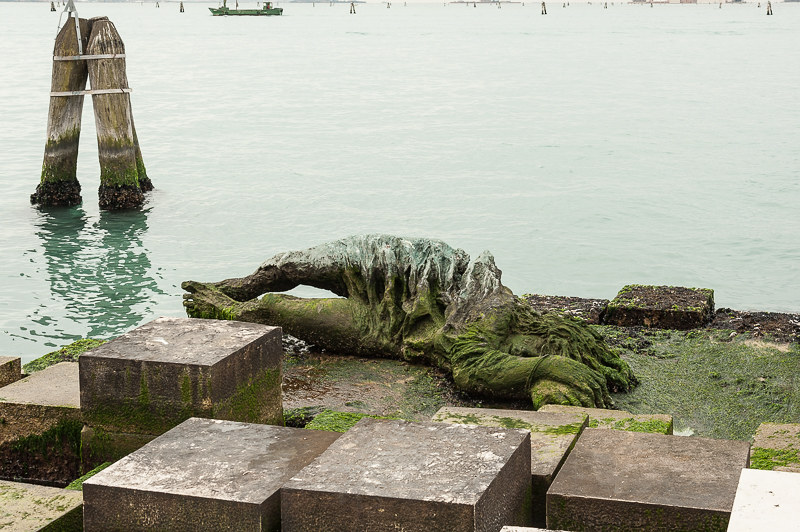
Ironically enough, we were going to the Biennale in the days following the Vivaldi concert, so it was a fruitful effort! With something to go off of, we went looking around the Biennale to see if anything fit the description. We asked workers at the Biennale, and one pointed to the shore and said, “Alla partigiana“. At first, my partner and I were a bit lost, but he then called over another worker. He explained there’s a statue of a sleeping woman in the water named Venezia alla partigiana. This roughly translates to “Partisan woman”; it was created to honor the women of the Italian resistance.
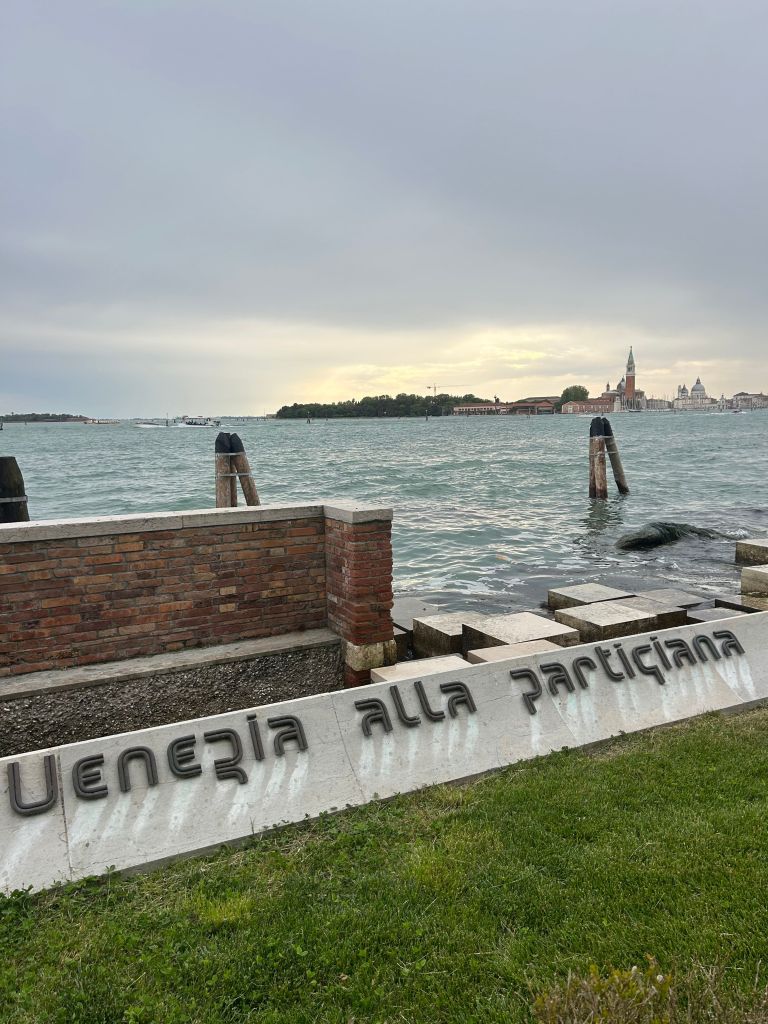
We wandered towards the shore and took a look around, but were still a little lost. We found a statue in a garden that aligned with the first line of the riddle, but we knew it couldn’t be it because it wasn’t in the water. We walked along the shoreline to see if we saw anything, but it was to no avail.
After lingering around the shore for a while, we walked up to a waiter at a restaurant, showed him our riddle, and asked about alla partigiana. His face lit up and he immediately agreed to help us. This man was kind enough to walk to the vicinity of the statue and explained to us that we had to look in the waves and to find the statue of a woman lying down. We thanked him and went our separate ways. Sure enough, we walked further along the shore and there was a sign with big letters that read, “Venezia alla partigiana”. There it was, our object: a bronze woman forever asleep as the waves wrap her in a loving embrace.
Navigating Venice as a foreigner is a challenge in itself, which is why I am so glad that our object was in a very open area and on a single street. Meaning there were little to no confusing walkways we had to use to reach it, as it was right behind the Biennale.
Michel Foucault and Jay Miskowiec write in their Of Other Spaces that, “It is a space that is however connected will all the sites of the city-state of the society of village, etc. since each individual has relatives in the cemetery” (25) about to cemeteries. Like a cemetery, the alla partigiana monument exists outside the flow of everyday time, but it remains deeply connected to it. Whether it be its symbolism, its artistry as a sculpture, or location, alla partigiana creates an atmosphere that affects everyone differently. It might not house the remains of loved ones, but it still holds something just as impactful. It represents a collective memory of sacrifice, struggle, and identity.
When In Doubt Ask A Venetian
Going into this activity, I was a bit skeptical that people were going to ignore us, but in fact, it was quite the opposite. I was pleasantly surprised by most people’s enthusiasm toward our inquiries about their culture. This exercise has helped me connect with the Italian people more as a result of having to interact with them at a deeper level.
Furthermore, I have encountered a kind of beauty in the hospitality and openness of the Italian people. In The Art of Travel by Alain De Botton, he writes that “…there was only one way to possess beauty properly, and that by understanding it…” (216). Through this exercise, I have gained a new understanding of the Italian people and why they are the way they are. I’ve always admired the beauty in their culture: the food, the music, the architecture… but now that I know why they have those things, it makes everything I’ve done and seen much more impactful.
The object I was tasked to find, “alla partigiana”, has taught me about pieces of Italian history that I had never heard of. The significance behind “alla partigiana” is the tradition of strong civic independence which dates back to the Republic of Venice. The Italian people are proud of their heritage and country, and the statue is a way of representing how far the have come. “Alla partigiana” is a window into Italy’s values of nationality, courage, and pride, but most importantly, it serves to recognize women’s role in shaping their history.
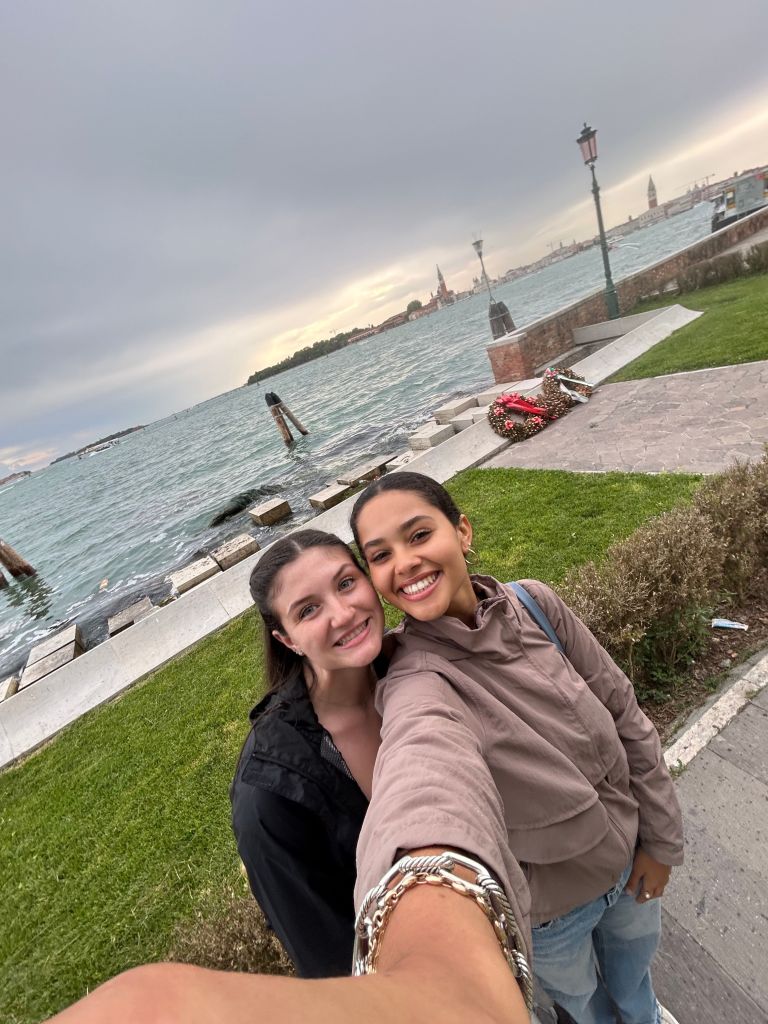
Reflecting on the relationship between tourists and locals, I’ve concluded that locals are very kind and tolerant as long as the tourists are open-minded and respectful. When we went asked locals about their culture in a respectful and open-minded manner, we received great feedback and positive interactions. Most of the people we encountered we tried speaking Italian to, and they were very happy to see us try to partake in their culture.
As a tourist, it is very easy to romanticize Venice, but once we left the major tourist areas and met more Italians, I started to understand the real Venice. The locals aren’t just extras in the tourist areas, they keep Venice alive. At the same time, our presence as tourists alters their way of life. Due to this, locals have become sometimes wary of us.
This was a little evident in some people’s hesitation and potential refusal to help us find our object. The scavenger hunt made me more sensitive to this separation, and I started to ask myself, “How can I gain a deeper understanding of Venetian culture in a respectful manner?”. The answer to this question was to simply engage with the space around me.
In reflection, I feel that I have grown more confident in my ability to navigate an unfamiliar space and to better engage with the space around me. I have gained a deeper cultural appreciation for Venice; I feel as though I have seen the real Venice behind the surface-level façade most tourists see. This scavenger hunt turned out to be far more than a fun challenge. It became a window into understanding how memory, space, and identity converge in Venice. I came away with a deeper respect not only for the monument I found, but for the people and culture that sustain this living, breathing museum of a city.
 Bianca's thoughts