

Da Vinci Rocks? His Involvement in Geology
“Leonardo da Vinci was not just a great painter. He was also a brilliant geologist…” – the Guardian
When we think of Leonardo Da Vinci, we probably think of his greatest works like “The Mona Lisa”, which paints a woman who is forever stuck between a subtle smile and mysterious gaze, and his depiction of Jesus’ final meal with his disciples titled, “The Last Supper”. But, this just scratches the surface of the legacy Da Vinci has left behind.
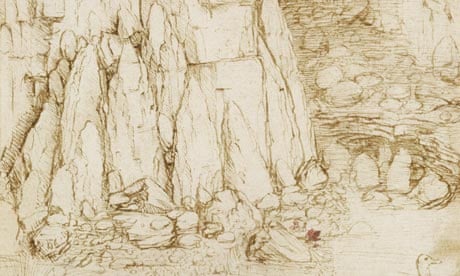
The legendary artist was born in April 1452 in Italy, where he lived most of his life in Florence and Milan. Growing up, his artistic and scientific genius was evident. As he matured, he turned to the natural world for inspiration for his art, which then led to his fascination with the earth. He began sketching and drawing the natural world around him, which included many rock formations, caves, and fossils, many of which he later studied.

“And how will you explain to me the fact of the pebbles being struck together and lying in layers at different altitudes upon the high mountains.”
– Leonardo da Vinci, 1508
“Geological Knowledge in the Dark Ages” Bressan 2019
Leonardo Da Vinci revolutionized early geology through his meticulous observations of rock formations, fossils, and erosion, challenging medieval myths and laying the groundwork for modern geological science centuries ahead of his time.
Geology in the Renaissance (14th – 17th )
The period before the Renaissance is named the Middle Ages. Prior to the Renaissance, the science of geology was not yet recognized, but observations about the Earth having to do with mining stones and minerals were the early stages of geology. A lot of the geological events like earthquakes, floods, (even famines) to alignments of planets and celestial events. They also attributed things to divine punishment and supernatural causes like demonic possession and spirits.
The biblical story of Noah’s Ark and the Great Flood was used to explain the locations of fossils, as there was not a solid scientific foundation on which to explain natural events. Religion was very prominent, so many people turned to it for a reason as why they were experiencing different events.
It wasn’t until the 15th-17th centuries of the Renaissance that scientific thought came to the forefront of humanistic thinking. Leonardo Da Vinci was a prominent figure during this time, his involvement of anatomy, flight mechanics, hydraulics, and even geology propelled him to become the legend we know him to be today.
Da Vinci’s Key Contributions to Geology
The Codex Leicester
The Codex Leicester is a book documenting notes and drawings done by Leonardo between 1506-1510. The C.D. is a summary of his observations of the natural world and movements of water (Google Arts & Culture).
It includes information on other areas of Da Vinci’s interest such as astronomy and hydraulic engineering. In the C.D., he suspected that the mountains and continents were submerged underwater at one point. He also suspected that they were formed by, “underground caverns shifting and collapsing, the subsequent balancing of earth and water, and the re-centering of earth’s center of gravity” (Google Arts & Culture). Some parts of his theory the earth moving are the early stages of the present theory of plate tectonics.
In the C.D., he also theorized about the Hydrologic (Water) Cycle. He came up with the theory that heat from the sun pulls up water from the earth’s caves to the tops of the mountains. He then refuted this claim with natural observations showing that springs at the tops of mountains were equally active in the winter as in the summer.
Observations of Sedimentary Rock Layers
Da Vinci observed and documented the processes of water movement, sediment transport, and the formation of sedimentary rock layers. He observed that lower layers of rock were older than the upper ones. Leonardo also noticed that some sediments were laid down by water, which suggested that water once covered regions around him.
In “Leonardo da Vinci (1452-1519) and the birth of stratigraphy” by Annalisa Ferretti et al., detailed accounts from several of da Vinci’s personal notes, including the Codex Leicester detail how extensively he contributed to observations about the sedimentary layers. An excerpt from the Leonardo Manuscript F, folio 79 and 80 states that, “[…]And from time to time, the sea bottom rose, depositing these shells in layers, […] in which cut the aforesaid layers of shells can be seen in bluish clay, along with other marine objects […] If the shells had instead been transported by the muddy deluge they would have been mixed, arranged separately in the mud, and not in ordered steps and layers, as we see them now” (Ferretti et al. 268-276). This displays the kind of critical scientific thinking that was the shift from Medieval to Renaissance.
Fossil Identification
In one Da Vinci’s personal notes, he wrote, “…among one and another rock layer, there are the traces of the worms that crawled in them when they [the layers] were not yet dry”, about the petrified remains of previously living animals (Forbes)
Disputing Claims About the Great Flood’s Involvement
He also refuted claims about the Great Flood being the reason fossils were found on the tops of mountains. It was a very popular theory that the Great Flood from the Bible was a contributing factor to fossils being on the tops of mountains. He hypothesized that the shells and fossils of animals discovered on the mountains and in caves had to have been the remains of animals that swam in those places when they were once submerged underwater. This reason is more plausible than the Great Flood because it is supported by scientific evidence, as opposed to claims based in religion.
Da Vinci also claimed that the natural processes that made the Earth come to, were slow and the result of ruthless natural processes. This opposes what is written in the book of Genesis in the Christian Bible, which states that creation happened in 7 days and was a divine, instantaneous formation.
Understanding How Water Shapes the Earth Over Time
Da Vinci found that the most powerful force in the natural world, was the movement of water. The movement of bodies of water (rivers, lakes, floods, etc.) has shaped the features of the landscapes. He studied the erosion of rivers and the formation of valleys. He theorized that landscapes changed gradually over time due to natural forces, as opposed to catastrophic events as suggested by religion.
Shift from Medieval to Renaissance in Geology


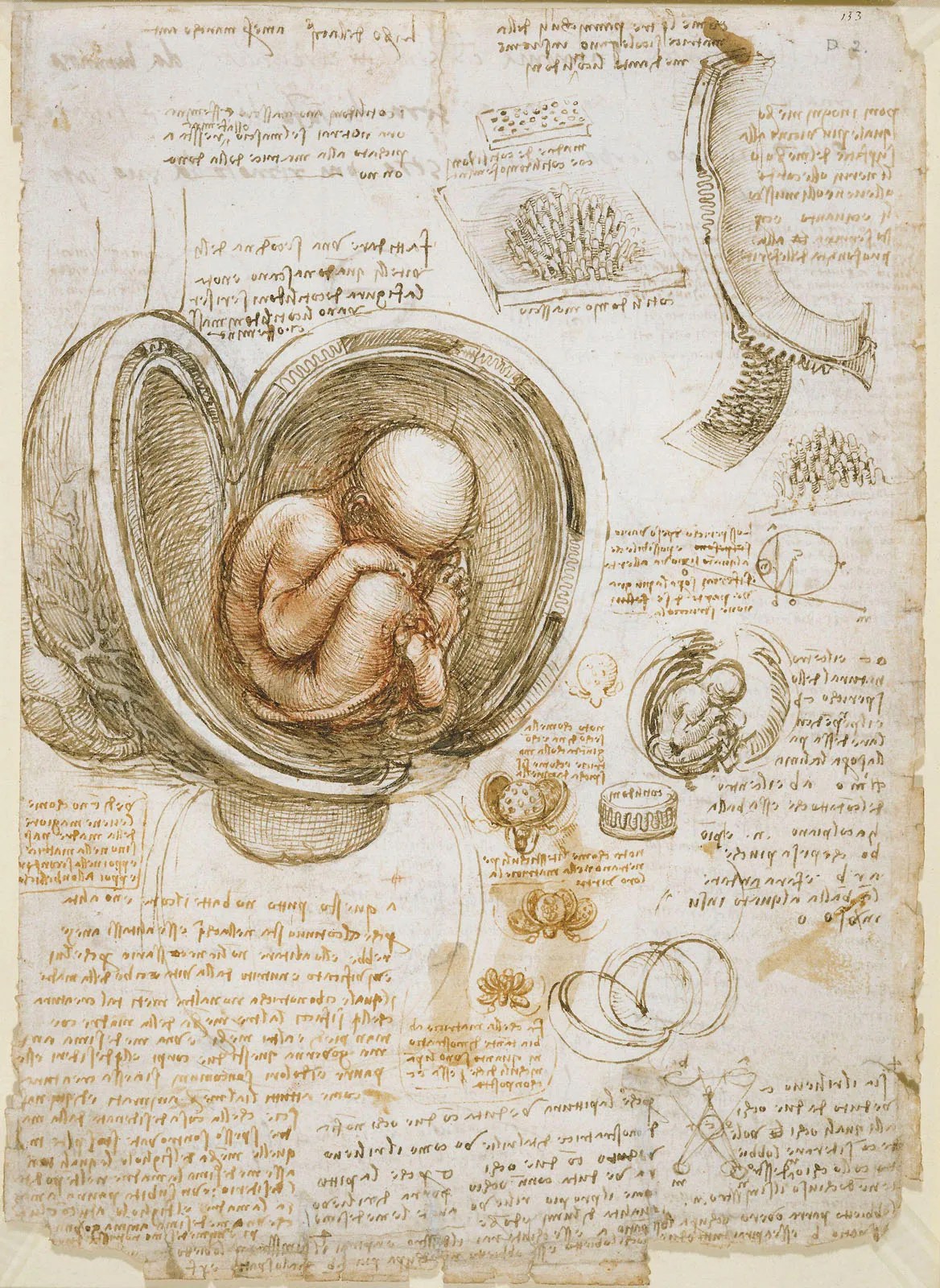

Leonardo da Vinci’s advancements exemplify the transition from the Medieval period to the Renaissance through his shift from faith-based explanations to observation and scientific reasoning—a hallmark of Renaissance thinking. In particular, Leonardo rejected traditional Biblical interpretations of natural phenomena, such as the belief that fossils were remnants of the Great Flood. Instead, he turned to empirical evidence and logical analysis. For example, he observed that the vertical layering of rocks and fossils corresponded to their relative age, laying the groundwork for stratigraphy. This marked a pivotal departure from religious dogma toward the empirical, scientific approach that defined the Renaissance.
In challenging the dominant medieval worldview, Leonardo helped catalyze a shift in mindset. The Medieval era prioritized spiritual salvation and tended to view the physical world as secondary or even illusory. In contrast, the Renaissance (and Leonardo himself) embraced a more holistic and present-focused approach. He studied the human body not only as a biological system but also as a symbol of the harmony between man, nature, and the cosmos. His integrated approach to science and art reflects the Renaissance ideal of the uomo universale (universal man), who bridges intellectual, spiritual, and physical realms.
Ultimately, Leonardo da Vinci’s embrace of both scientific inquiry and artistic creativity positioned him as a transformative figure in Western thought. His contributions demonstrate how Renaissance thinkers moved beyond Medieval constraints, forming the foundation for modern science and humanism.
Connection to Italian Discoveries
Leonardo’s ideas align closely with our course readings, especially Leonardo da Vinci by Walter Isaacson, an optional but enlightening text. Isaacson emphasizes Leonardo’s scientific process, quoting him, “My intention is to consult experience first, and then with reasoning show why such experience is bound to operate in such a way” (Isaacson, 173). This quote highlights Leonardo’s reliance on first hand observation followed by rational deduction, a method that not only characterized his geological work but also echoed the broader intellectual currents of the Renaissance.
As we progress through da Vinci’s involvement in the transition from the Medieval to the Renaissance period and his impact on how we think about time and space, his geological observations also provide insight into how we interpret the construction and longevity of medieval and Renaissance walls. Da Vinci’s detailed studies of erosion, stratification, and rock composition helped advance our understanding of how natural forces interact with human structures over time. For instance, his notes on soil stability and water flow offer a framework for analyzing the deterioration patterns of stone walls, especially those built into slopes or near waterways.
Sources
- Bambach, Carmen C. “Leonardo Da Vinci (1452–1519).” The Metropolitan Museum of Art, 1 Oct. 2002, http://www.metmuseum.org/essays/leonardo-da-vinci-1452-1519.
- Bressan, David. “Leonardo Da Vinci – Renaissance Artist and Pioneering Geologist.” Forbes, Forbes Magazine, 2 May 2019,
- Bressan, David. “Geological Knowledge in the „Dark Ages”.” BressanGeoconsult, 18 Aug. 2019, http://www.bressan-geoconsult.eu/geology-in-the-alps-from-medieval-times-to-the-renaissance/.
- Ferretti, Annalisa, et al. Leonardo Da Vinci (1452-1519) and the Birth of Stratigraphy, 2020, air.unimi.it/retrieve/handle/2434/717559/1426304/Ferretti et al. 2020 Leonardo da Vinci preprint.pdf.
http://www.forbes.com/sites/davidbressan/2019/05/02/leonardo-da-vincis-earth-shattering-insights-about-geology/. - “Leonardo Da Vinci’s Earth-Shattering Insights about Geology.” The Guardian, Guardian News and Media, 23 Nov. 2011, http://www.theguardian.com/artanddesign/jonathanjonesblog/2011/nov/23/leonardo-da-vinci-earth-geology.
- Leonardo Da Vinci, http://www.leonardo-da-vinci.ch/science#:~:text=While%20he%20learned%20about%20art,led%20to%20his%20scientific%20career. Accessed 7 May 2025.
- Worrall, Simon. “What Made Leonardo Da Vinci a Genius?” History, 4 Nov. 2017, http://www.nationalgeographic.com/history/article/leonardo-da-vinci-genius-walter-isaacson.
 Bianca's thoughts